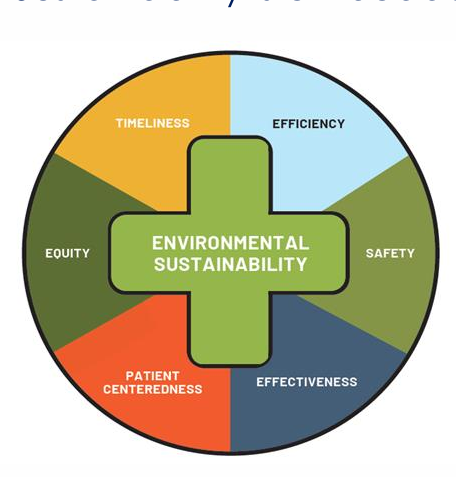
This charter can be used as a stand-alone resource or alongside existing organizational templates. It is a structured tool that builds on the Model for Improvement by integrating sustainability prompts into standard project charter components. It follows the SE-QI approach, which embeds sustainability within existing QI steps and structures, rather than adding it as a separate process. Prompts are woven throughout core elements such as scope, problem definition, and measurement planning. Each slide also includes accompanying speaking notes with additional guidance for each step.
Launched in fall 2023 in collaboration with the Réseau d’Action pour la Santé Durable du Québec (RASDQ), the Association québécoise des médecins pour l’environnement (AQME), Synergie Santé Environnement (SSE) and CASCADES, and with the support of the Association des médecins d’urgence du Québec (AMUQ) and Choisir avec soin, the “Les Gants, pas tout le temps” campaign aims to raise awareness among healthcare personnel of the appropriate use of gloves, as proposed by the WHO in the information sheet on glove use.
Ecovamed publishes a first comparative study on the carbon footprint of nitrile gloves depending on the production country, and the correlation with its Environmental Label of Origin
This webinar explores how occupational therapy can support climate-conscious, sustainable healthcare. It highlights ways practitioners can reduce environmental impacts, design nature-informed services, and build climate resilience. Janet Craik and Nancy Rushford present the Sustainable Occupational Therapy playbook, offering guidance for low-carbon, sustainable occupational therapy practice.
This Playbook is intended to do the following: a) Provide background information, resources, and considerations to guide more sustainable and climate-resilient occupational therapy. b) Highlight the contributions that occupational therapy can make in transitioning current healthcare systems towards high-quality, low-carbon, sustainable and climate-resilient care.
This webinar examines how medications, while essential to healthcare, have significant environmental impacts and can contribute substantially to healthcare’s carbon footprint, particularly in primary care. It explains that most prescriptions are written in primary care, creating an opportunity for more sustainable prescribing practices that combine patient-centred care with reduced environmental impact. The session in the Sustainable Primary & Community Care Implementation Series features Ilona Hale, a family physician with the East Kootenay Division of Family Practice and Assistant Clinical Professor at the University of British Columbia, and Trudy Huyghebaert, a clinical pharmacist with the University of Calgary and Alberta Health Services, who share prescriber and pharmacist perspectives on sustainable medication use.
This webinar is part of the “Climate, Health, and Healthcare” speaker series for health professional learners. It features Ingrid Waldron, MA, PhD, who discusses environmental racism, environmental justice, and their impacts on the health of communities.
This webinar presents a fireside chat hosted by CASCADES, the Indigenous Primary Health Care Council, and the Alliance for Healthier Communities. Panelists share insights on the role, responsibility, and capacity of the primary health care sector and health professionals in identifying and addressing climate change vulnerability and leading adaptation efforts. The discussion features Imara Rolston, Dakota Recollet, Selma Tobah, and Bev Taylor, and is moderated by Fiona Miller and Natasha Beaudin.