Summary / Key takeaways
Ensuring that chronic diseases are managed appropriately and in a timely manner can reduce exacerbations or worsening of conditions that would lead to hospitalizations and/or more intensive (and carbon-intensive) care. Effective chronic disease management supports better patient outcomes through prevention, early intervention, routine monitoring, and coordinated care. By reducing avoidable emergency department visits, hospital admissions, diagnostic testing, and high-intensity treatments, health systems can lower greenhouse gas emissions, resource use, and waste generation. Expanding access to primary care, virtual care, patient education, and evidence-based treatment pathways can help patients manage conditions earlier and more effectively while supporting a more sustainable, resilient, and environmentally responsible health care system.
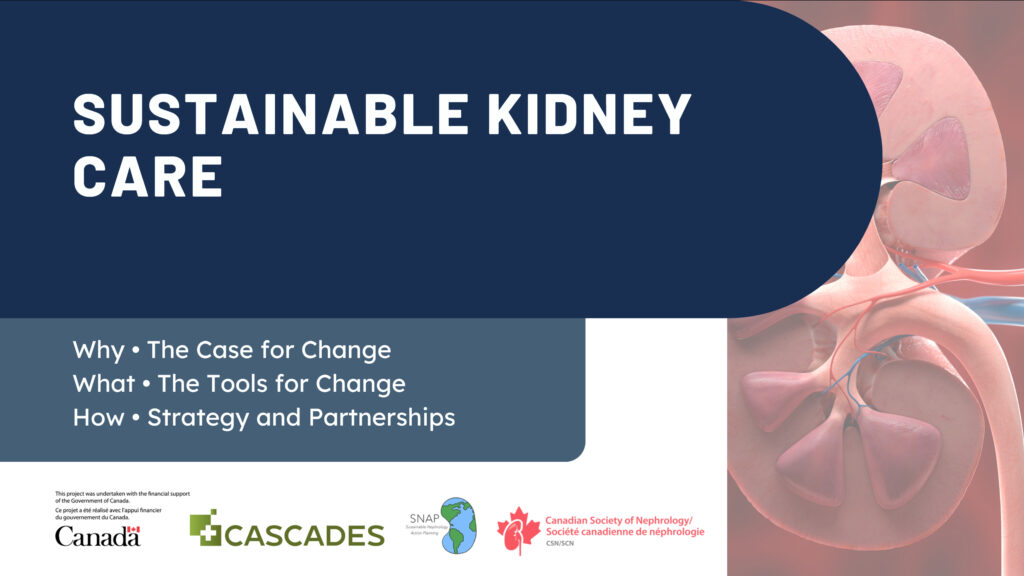
Playbook: Sustainable Kidney Care
Suggested Citation:
Stigant C, Nour S, Finkle N, Devitt K. Sustainable Kidney Care. Version 1.0. [Internet]. CASCADES; 2024 [cited DATE]. Available from: https://new.cascadescanada.ca/.