Summary / Key takeaways
Medications can be optimized during clinical medication reviews, where concerns and deprescribing opportunities can be identified (e.g., potential inappropriate medications, potential prescribing omissions, medications that are not dosed appropriately, address prescribing cascades).
Non-pharmacological strategies may represent a more environmentally friendly approach to care. Some of these strategies (e.g., social and nature prescribing) may already be employed at hospitals by healthcare professionals.
Examples include:
- using exercise therapy for pain
- dietary modifications
- exercise recommendations for hypertension
- addressing inpatient sleep disturbances
Implement a system of ongoing, criteria-based evaluation of medication use (i.e., Drug use evaluation (DUE) that will help ensure medications are being used appropriately within a healthcare setting.
Medicine stewardship programs are structured, often interprofessional programs, with the goal of improving quality use of medications and addressing challenges within a specific therapeutic specialty, ensuring appropriate and efficient use of resources. Stewardship teams and programs are particularly useful in improving medication use in specialties where there is a high risk of significant adverse effects and/or inappropriate prescribing.
Institutions can promote medication optimization by requiring healthcare providers to set a stop date for select medication orders to ensure the therapy is stopped when necessary.
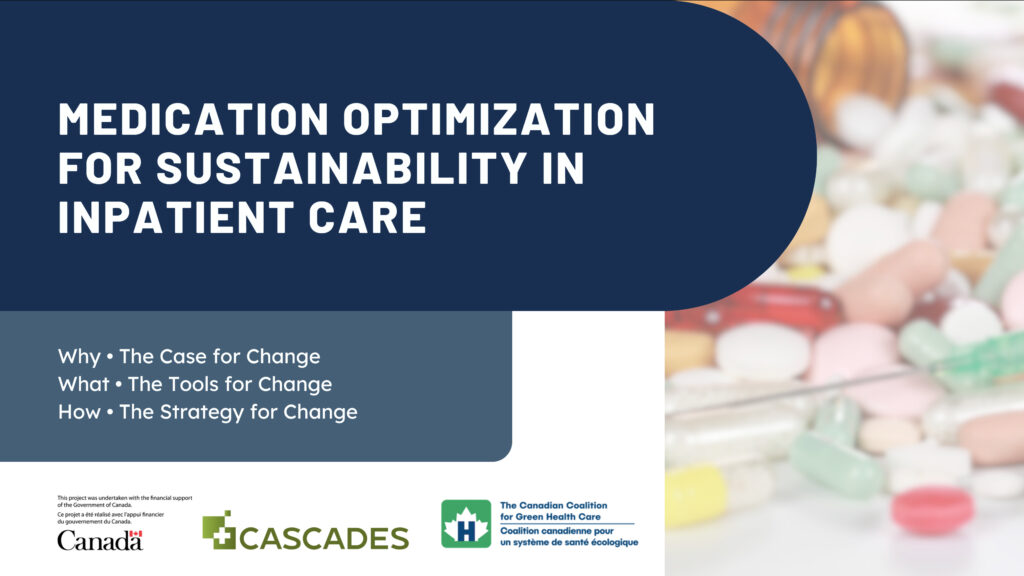
Playbook: Medication Optimization for Sustainability in Inpatient Care
Suggested Citation:
Lam I, Fallis S, McCarthy L, Sergeant M. Medication Optimization for Sustainability in Inpatient Care. Version 1.0. [Internet]. CASCADES; 2024 [cited DATE]. Available from: https://new.cascadescanada.ca/.