This playbook introduces the SE-QI framework and provides background information, resources, and considerations for embedding sustainability in healthcare improvement projects. It was developed in collaboration with key partners and experts in QI across Canada. It serves as a resource for clinicians, health care professionals, students, trainees, and decision-makers involved in QI work, aiming to inform them of: Sustainability-Embedded Quality Improvement (SE-QI) positions quality improvement (QI) as a practical pathway for embedding sustainability within clinical and operational practice.
This playbook introduces the SE-QI framework and provides background information, resources, and considerations for embedding sustainability in healthcare improvement projects. It was developed in collaboration with key partners and experts in QI across Canada. It serves as a resource for clinicians, health care professionals, students, trainees, and decision-makers involved in QI work, aiming to inform them of:
Why SE-QI is an essential and practical approach to quality improvement in healthcare,
What tools are available to support planning and implementation, and
how to effectively implement SE-QI into practice to advance high-quality, low-carbon, resilient healthcare.
WHO is calling on all civil society organizations and other partner organizations to engage with the campaign and accelerate progress at achieving effective hand hygiene at point of care!
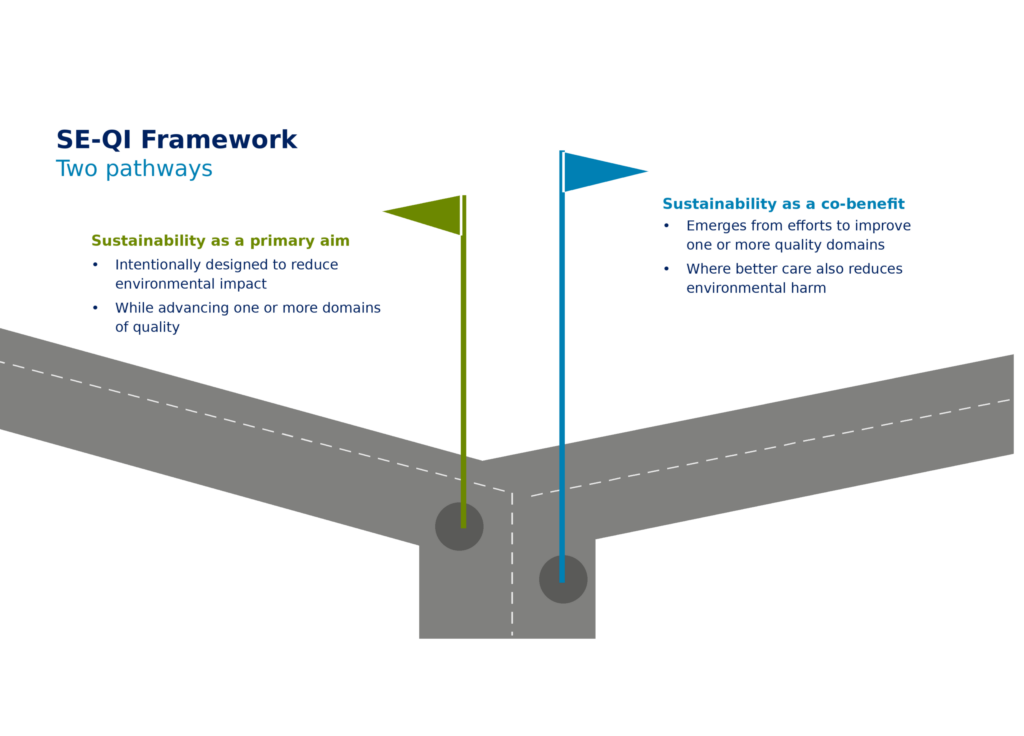
The SQUIRE-ENV extension is being led by the Centre for Quality Improvement and Patient Safety (CQuIPS) in collaboration with CASCADES and national and international quality improvement leaders. Building on the internationally recognized Standards for Quality Improvement Reporting Excellence (SQUIRE), this extension establishes structured guidance for reporting environmental sustainability in quality improvement projects where sustainability is a co-benefit or primary aim. Because SQUIRE is widely used by journals, conferences, and healthcare systems to report improvement work, SQUIRE-ENV will help embed sustainability into how QI initiatives are designed, documented, and shared. Publication is anticipated in 2026.
This charter can be used as a stand-alone resource or alongside existing organizational templates. It is a structured tool that builds on the Model for Improvement by integrating sustainability prompts into standard project charter components. It follows the SE-QI approach, which embeds sustainability within existing QI steps and structures, rather than adding it as a separate process. Prompts are woven throughout core elements such as scope, problem definition, and measurement planning. Each slide also includes accompanying speaking notes with additional guidance for each step.
The environmental impact of PPE is large and could be reduced through domestic manufacture, rationalising glove use, using reusables where possible and optimising waste management.
Hence, in settings with frequent use of sharp equipment, open wounds, and mucus membrane exposure, examination gloves should be required. In cases where most pathogens cannot be transmitted through intact skin, the procedure is not seen as an exposure risk, and natural defences form an adequate barrier against transmittable disease, and sanitation of the hands might be an adequate and more ethical consideration for use. We have illustrated some examples to help readers decide when removing gloves for a procedure is appropriate and when it is not.